
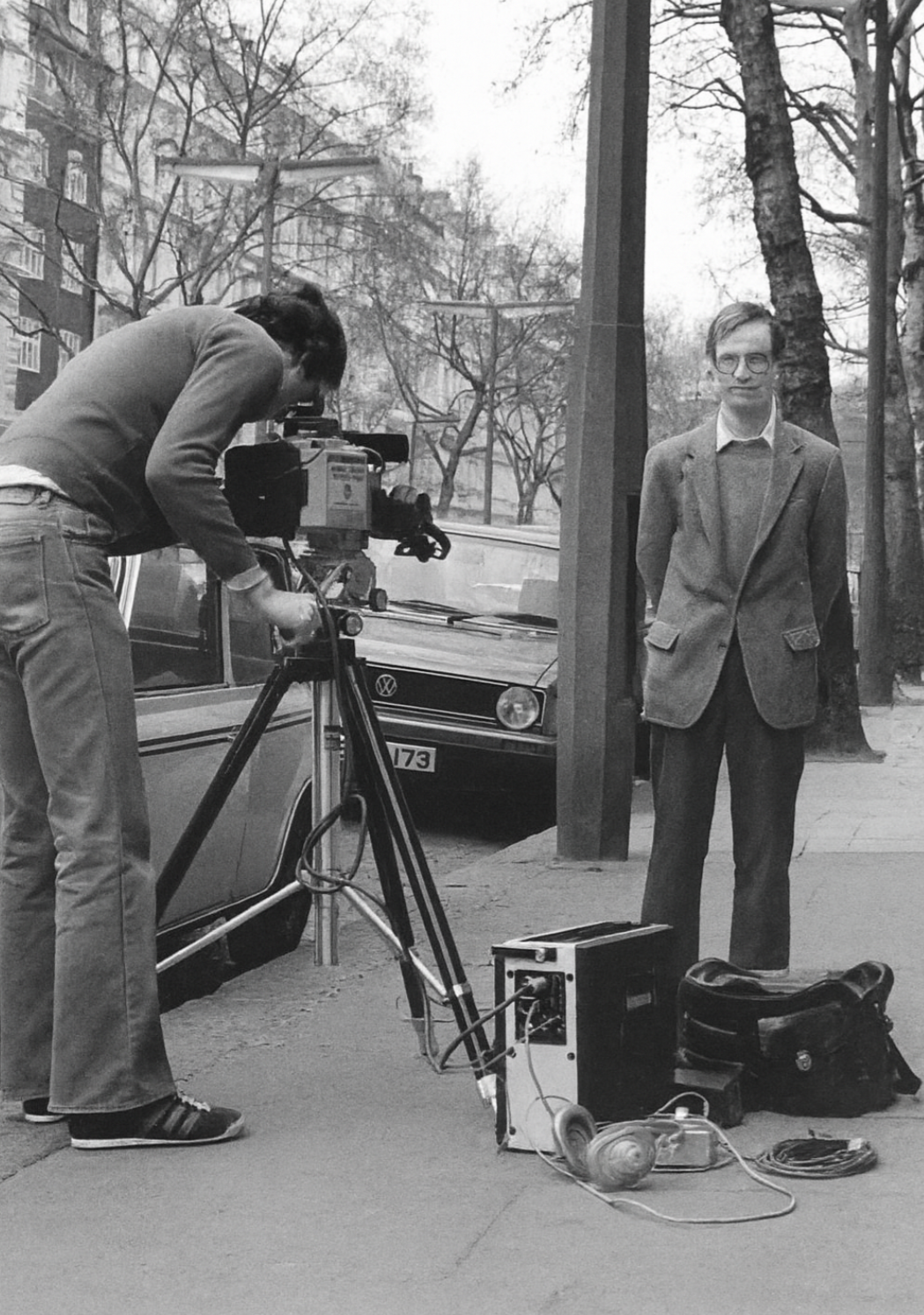


Prof. Dylan Hewit is a former Principal Teaching Fellow in Experimental Design in the Department of Mathematics at Imperial College London, where he also served as one of the College’s Tutors. Renowned for his clarity of teaching and his wry sense of humour, he attracted generations of students to one of the Department’s most popular courses, Games, Risks, and Decisions, which blended probability, behavioural economics, and strategic reasoning.
Hewit’s research contributions lie primarily in the field of Experimental Design, where he developed frameworks for adaptive experiments that were later adopted by departments as diverse as Medicine, Chemical Engineering, and even Music Technology. He has a knack for bridging abstract mathematical principles with practical applications, often remarking that “the true elegance of mathematics is revealed when it solves a messy problem in the real world.”
During his tenure, Hewit was a sought-after collaborator. He co-designed clinical trials with the Faculty of Medicine, consulted on aerodynamics experiments in the Department of Aeronautics, and even advised on the design of cognitive psychology studies examining decision-making under uncertainty. His published work is frequently cited not only in mathematics journals but also in applied sciences, testament to the wide reach of his methodology.
Outside of research and teaching, Hewit played a quiet but significant role as a mentor. Many former students recall his open-door policy and his tendency to recommend books that lay far outside the mathematical canon – ranging from Marcus Aurelius to Jorge Luis Borges – as a way of broadening their intellectual horizons.
Upon retirement, Hewit settled on a modest farm in Donnithorpe, where he has cultivated a quieter life centred on beekeeping, viticulture, and the study of local folklore. His fascination with systems and equilibria, once applied to human behaviour and scientific trials, now finds expression in the delicate balance of hives and orchards. He occasionally writes essays for obscure agricultural journals, applying mathematical insights to questions of hive dynamics and sustainable farming.
Though he has stepped back from full-time academia, Hewit continues to give occasional guest lectures at both Oxford and Imperial College, where his talks – mixing technical precision with philosophical reflection – remain popular. Rumours persist that he is drafting a book tentatively titled Games People Play, a hybrid of memoir, mathematics, and cultural critique.
Colleagues sometimes joke that he has become “a gentleman farmer-philosopher,” but those who know him well see the continuity: a lifelong search for patterns, whether in data, in human behaviour, or in the rhythms of nature.
Interviewer (I): Professor Hewit, thank you very much for inviting us back to your farm in Donnithorpe. Can you update us on your work since our previous conversation on 20 August, 2025?
Dylan Hewit (DH): It’s a pleasure to welcome you back. I’m well informed about the activities of the Thalesians and I’m an avid fan. Now, to answer your question, our team has published more of Prof. Paul Gordon James‘s papers, which we have called The Mechanist. You will be pleased to know that The Mechanist will be available globally: on Amazon.co.uk, Amazon.com, in European bookshops, in Brazil, Australia, all over the world.
I: Since our last interview, how has the reception among scholars and the public differed since The Night’s Cipher came out?
Dylan Hewit (DH): It’s been fascinating to watch. When The Night’s Cipher first emerged, many academic peers were puzzled — even dismissive — because it straddles genres: part historical diary, part speculative testimony. That very ambiguity unsettles people trained to classify documents neatly. But among general readers, especially those intrigued by Victorian science and cryptic histories, it’s sparked genuine curiosity. I’ve been invited to speak at interdisciplinary gatherings — not just in mathematics and history departments, but in literature and cultural studies as well. All of that, I think, reflects The Mechanist’s broader appeal as something more than a mathematical artifact.
I: Speaking of The Mechanist, can you share more about what James reveals in that forthcoming volume — without spoiling too much?
DH: Absolutely. Where The Night’s Cipher laid the groundwork — showing his early entanglements with secret societies, cryptic orders, and figures of dark intrigue — The Mechanist pushes further into the collision between emerging technologies and Victorian psychology. James becomes increasingly aware of the roles that emerging machines played in social theatre, public spectacle, and — disturbingly — the manipulation of human perception. There are chapters I think of as early reflections on what we now call “cybernetic illusion” — how mechanical systems influence human choice, often without our conscious awareness.
I: That sounds eerily relevant today. Do you see parallels between James’s era and contemporary society?
DH: Very much so. The Victorian age was a period of rapid technological change — electric light, mechanised transport, telegraphy. People were exhilarated, anxious, perplexed. In The Mechanist, James narrates how these new technologies intersected with stagecraft, pseudoscience, and public psychology. Modern readers can’t help but draw lines from that to our own digital world, where algorithms and screens profoundly shape attention and behaviour. The context is different — 19th century London vs. 21st century cyberspace — but the core tension between control and autonomy feels surprisingly continuous.
I: As an experimental design expert, how do you approach interpreting James’s diaries? Do you treat them as historical records or as narrative constructs that resist simple categorisation?
DH: I treat them as data of ambiguity. In experimental design, we’re often trying to understand not just outcomes but the context in which outcomes arise — what influences bias, how interpretation shapes inference. James’s writings refuse straightforward categorisation; they mix precise observation with subjective reflection. Instead of discarding the subjective bits as “noise,” I analyse them as part of the signal: they tell us as much about James’s mind and his cultural milieu as about the events he describes. That, to me, is historically and scientifically rich.
I: Critics have previously suggested that James may have embellished or imagined parts of his story. Does that concern you?
DH: It would be irresponsible to ignore the possibility that some episodes were embellished — or misremembered, or shaped by James’s own fears and dreams. But dismissing the entire narrative because parts are fantastical misses the point. Many historical sources are imperfect; letters, diaries, memoirs — they all bear the imprint of the author’s psychology. My job isn’t to sanitize James’s voice; it’s to contextualise it, to understand what the voice tells us about the era and about how humans grapple with uncertainty.
I: Will you continue to work on this material after the release of The Mechanist?
DH: Certainly. There are layers to James’s papers that we have yet to explore — drafts, cross-references, marginalia. Each notebook seems to echo with unanswered questions. I hope future scholars will take up this material from new angles — perhaps with computational text analysis, or with historians of science and technology. The diaries are a gift that keeps on perplexing.
I: Finally, would you perhaps disclose the names of some of your academic collaborators?
DH: No, sorry. It would be far easier for me to discuss the subject myself, now that I’m semiretired. My colleagues, on the other hand, are actively engaged in teaching and research and I’m sure they wouldn’t want to mix their public academic identities with what to many appears to be a literary project. However, while we are on the subject, I would like to sincerely thank Atmosphere Press and our excellent editor, Nathaniel Lee Hansen. If you are looking for editorial services, I can thoroughly recommend him.